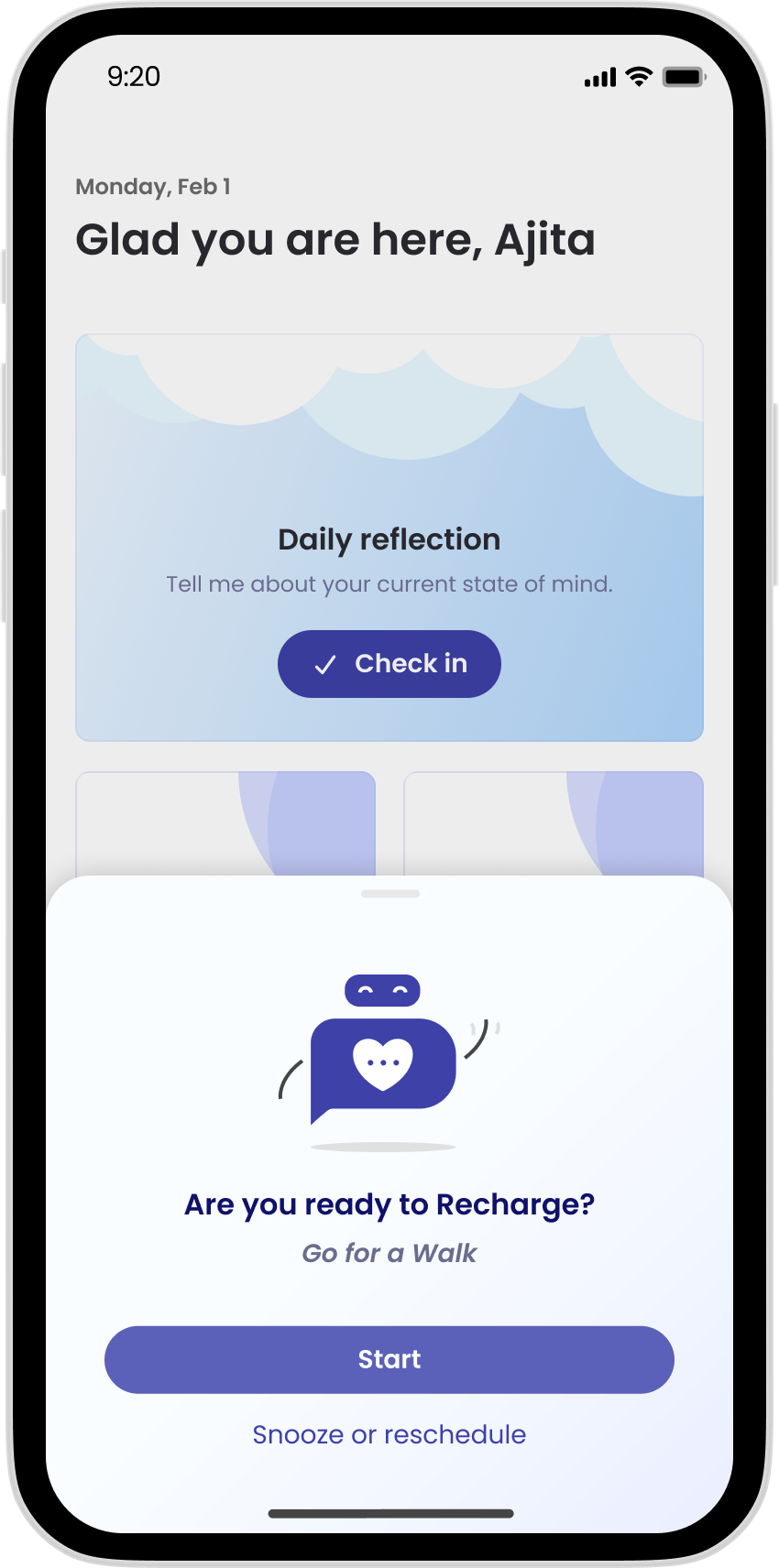
Caring for caregivers
Helping caregivers value self-wellness through empathetic interventions with minimal cognitive burden.
Overview
Helping caregivers pencil in self-wellness
COCO (Caregiving for Caregivers Online) is a B2B startup that provides wellness interventions for caregivers through their personable chatbot AI, CocoBot. While working on a team with one other designer and two dedicated researchers, we aimed to enhance how caregivers approached and practiced self wellness.
Problem space
What we knew
Nonprofessional family caregivers dedicate their time, attention, and emotion toward improving the wellbeing of their loved ones with chronic conditions. Oftentimes, caregivers forget their own needs in the process. Our goal was to utilize COCO's mobile app and chatbot AI to help these caregivers take better care of themselves. However, our first step was to conduct research on caregivers' day-to-day lives and why they currently face blockers to self-care.
We guided our research with three primary questions:
- • What events and pain points occur in a caregiver's daily life?
- • How do caregivers currently approach conversations about their wellbeing?
- • What are people's perceptions and behaviors towards chatbot AI?
Research outcomes
Triangulating findings
A competitive analysis of 18 apps in the realm of mental healthcare and chatbot AI, a 1-week diary study of 5 participants followed by contextual interviews, and a review of 62 academic research papers. We conducted thematic analysis across our different methods, which included quotes from participants, photos from the diary study, snippets from the literature review, and findings from the competitive analysis.
Due to the constraints of working within the confines of a mobile app and utilizing this app's chatbot AI, we focused on which pain points would be best addressed via our intervention. We settled on three main pain points.
Problem definition
Evolving our How Might We question
The four of us spent time incorporating these defined pain points into our overall mission statement.
First stab at problem solving
Onboarding experience for Quiet Time
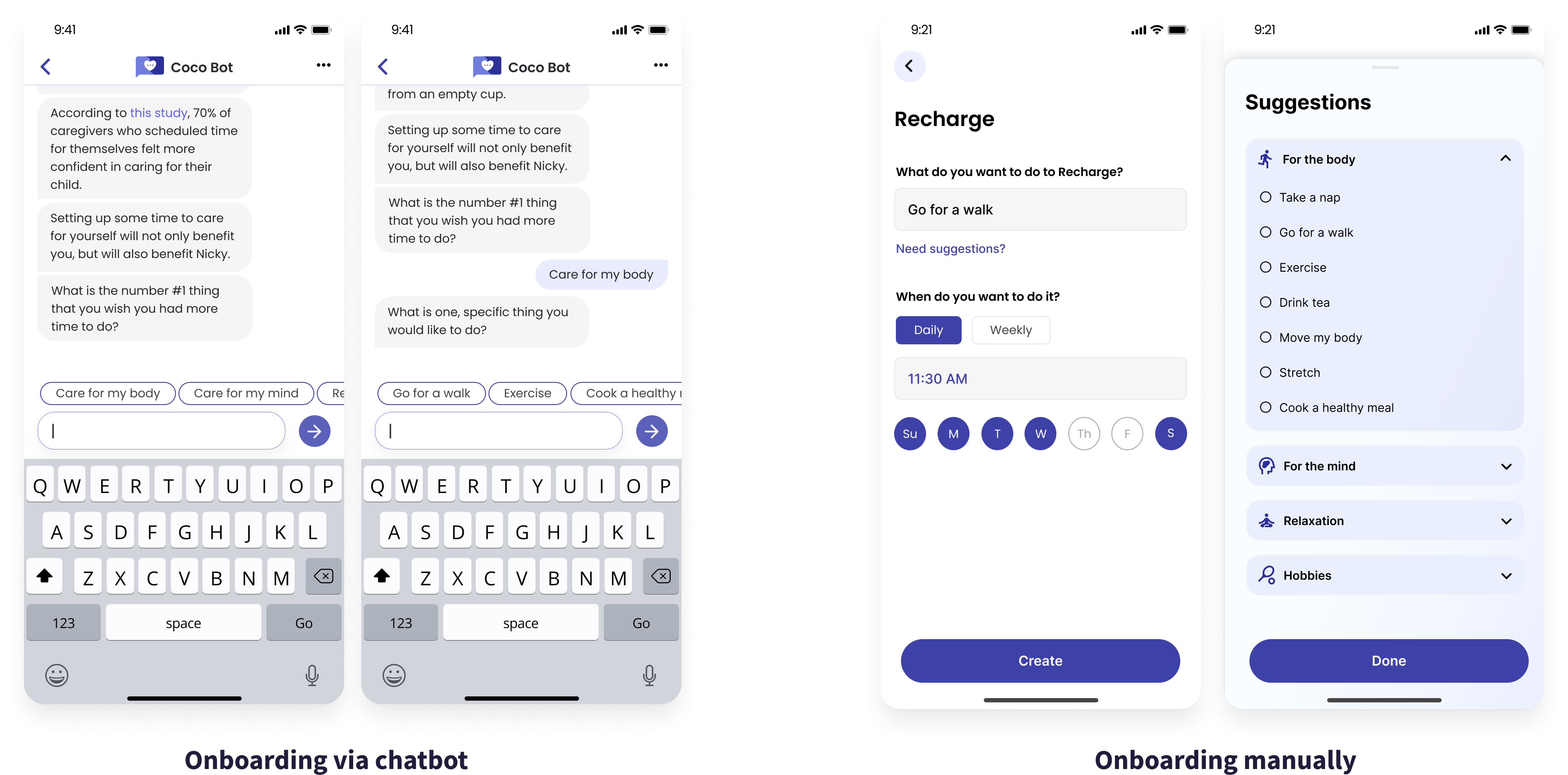
Since users would primarily be coming to the CocoBot app for the chatting feature, we decided to support a chat-based onboarding experience to encourage caregivers to set up time for themselves. I provided quick response options, so that caregivers can spend less time deliberating and also get inspiration for what they'd want to focus their time on. I also designed a manual pathway of setting up goals and focus mode.
Actioning on Quiet Time
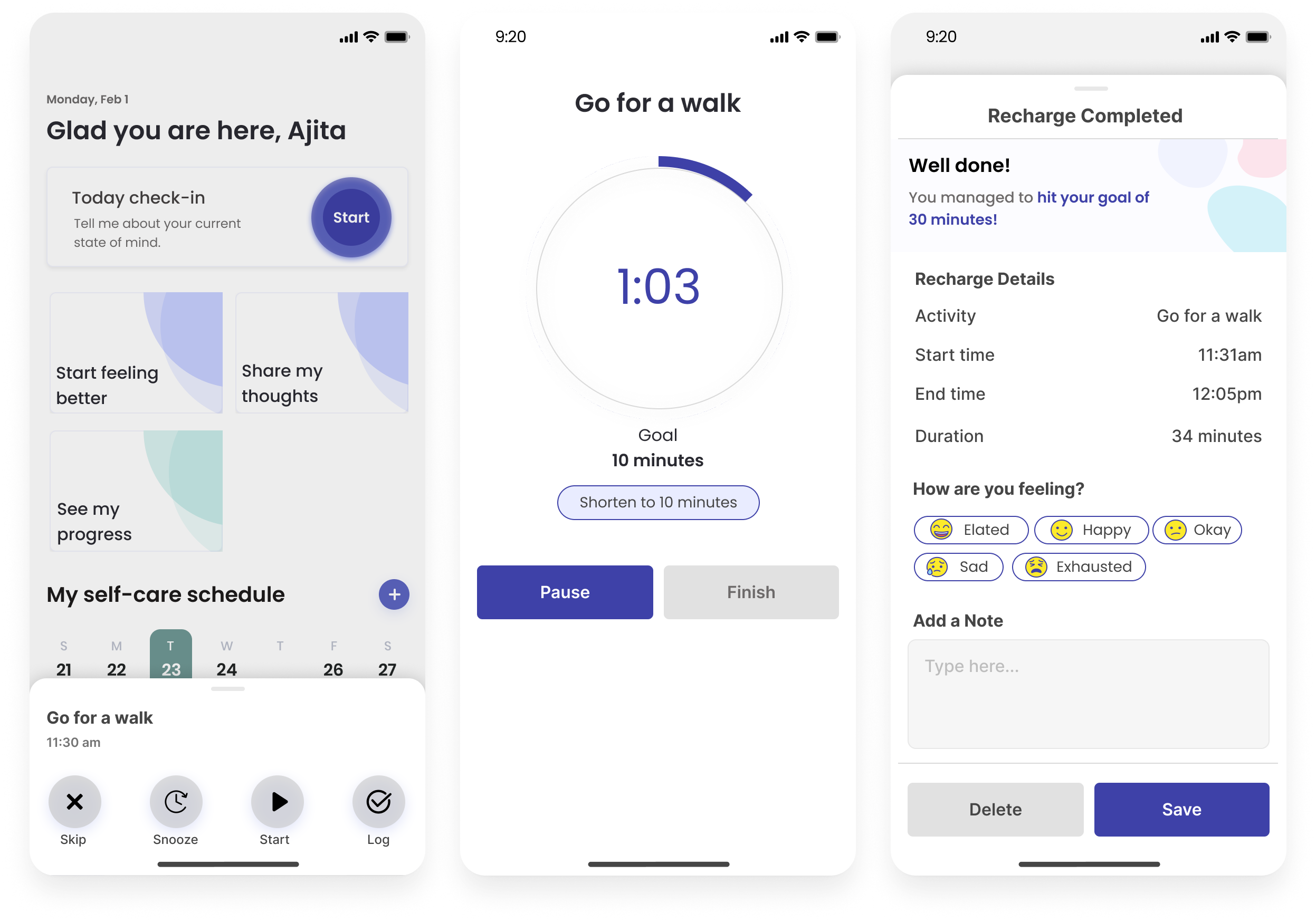
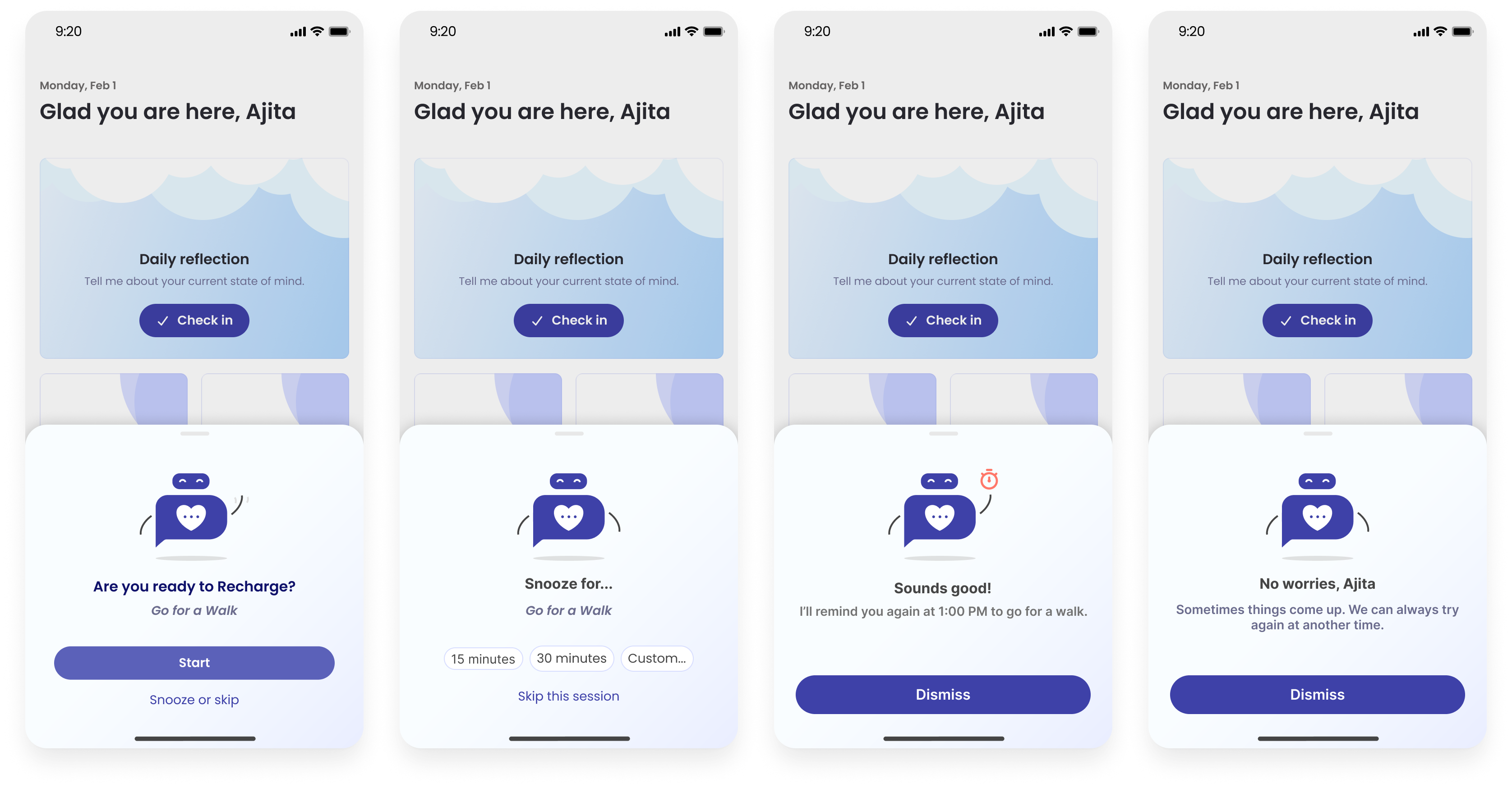
Caregivers would also have a dedicated space or "mode" to action on their self-wellness. We'd notify them of their scheduled Quiet Time via push notifications, but also give them flexibility to reschedule or skip Quiet Time sessions. When caregivers choose to skip a session or shorten their session, we made sure to confirm their option using guiltless language.
Testing
Top insights from testing
After our first rounds of design iterations, we wanted to know if we were building the right thing. How do our explorations answer the user needs outlined above? With the evaluative research we organized, we sought to learn about the desirability of new features and how users would interact with the new proposed features in silos, and also in-conjunction with each other.
Final iteration
Renaming the feature + adjustable reminders
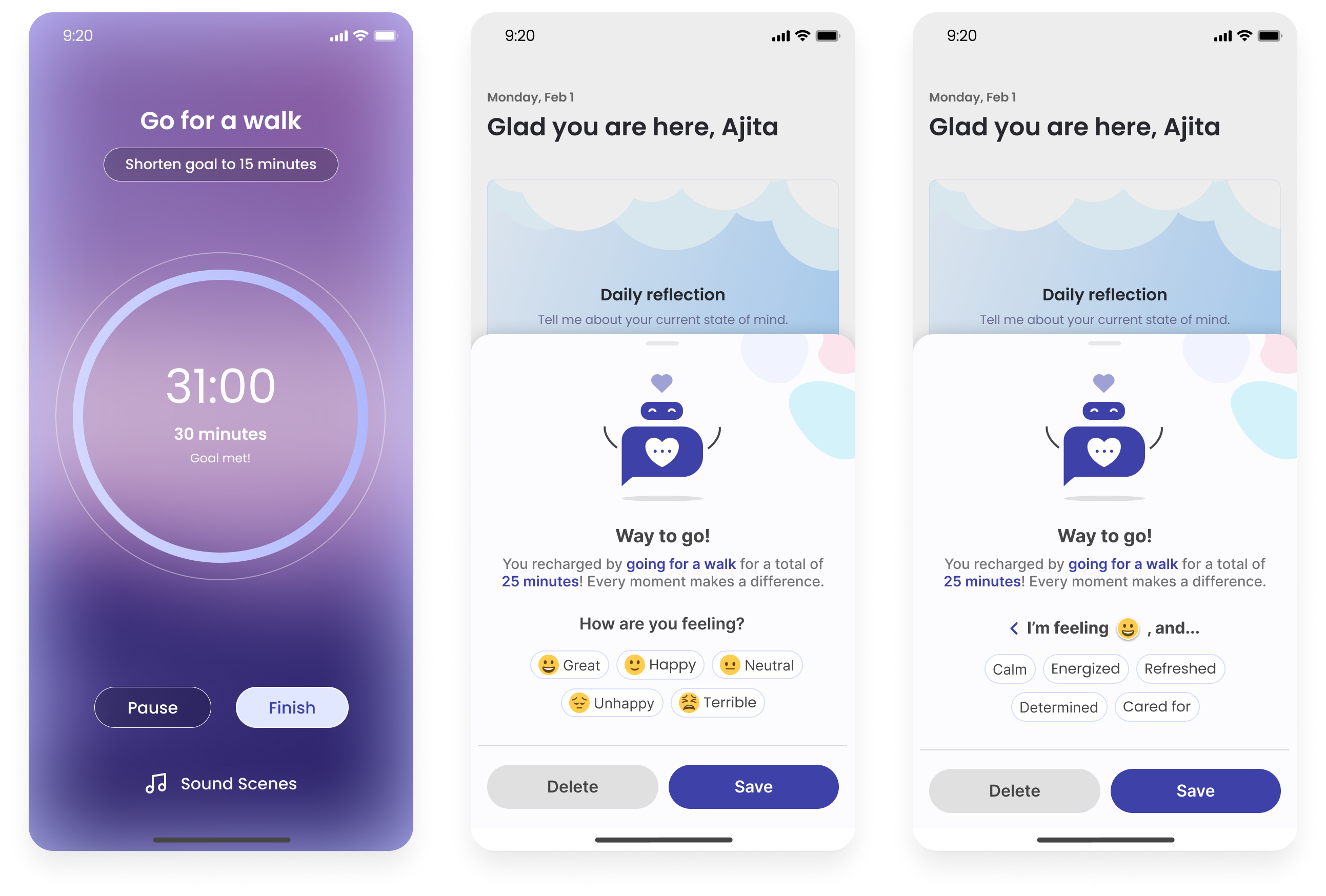
After polling the users we tested with, "Recharge" as a term was more well-received and made more sense for the activities users wanted to partake in. So, we updated all of our copy to reflect the change. We also added illustrations of the company's CocoBot mascot within the adjustable reminders screen. This was to add a more light-hearted and visually-engaging feel to the experience.
Post-session follow up with less cognitive load
The post-session follow up cuts down on the content. The most important metrics are summarized in one sentence, and we only require caregivers to click relevant tags to reflect, rather than requiring free-text entry.
Creating the "Weekly Insights Report"
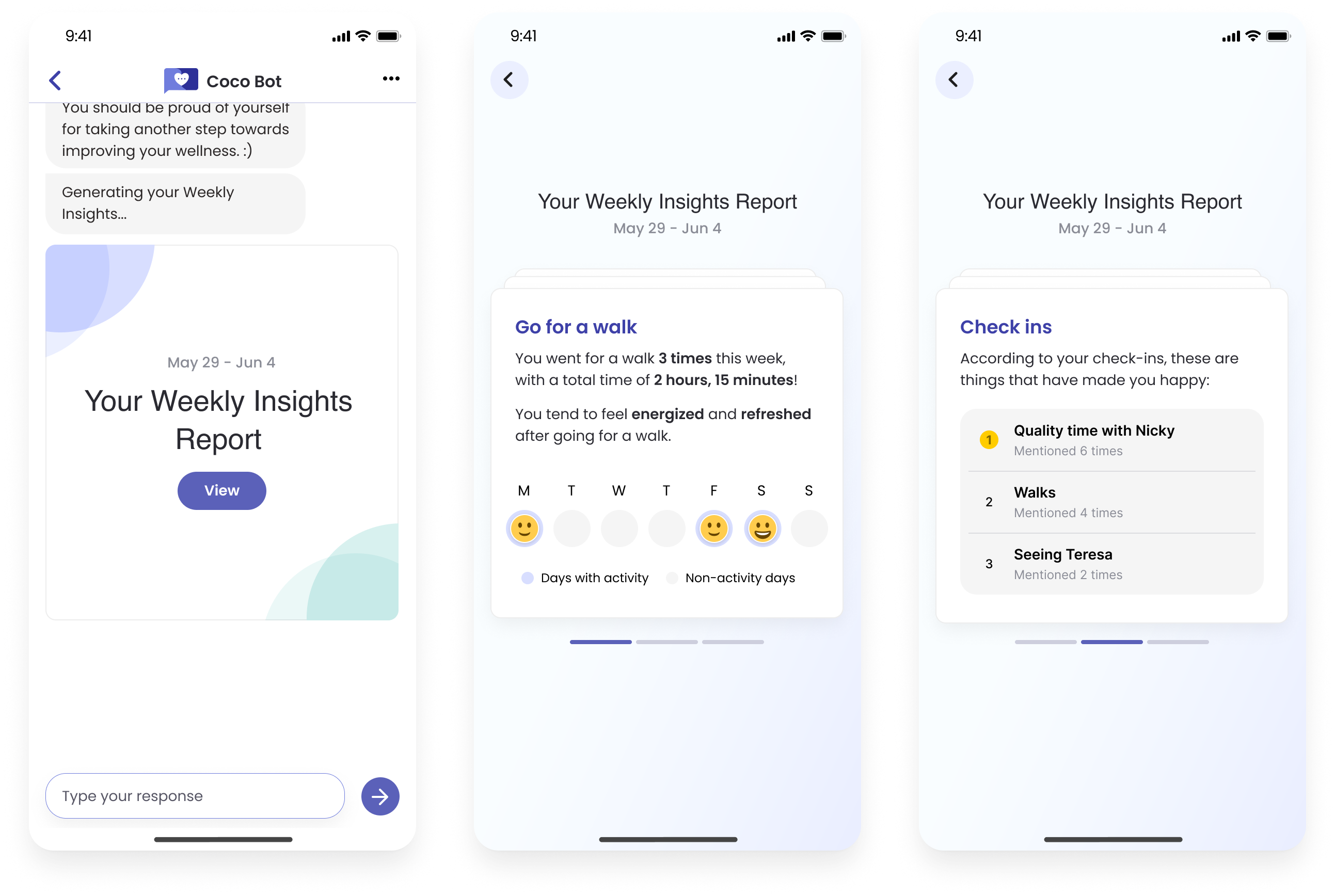
In order to address the desire to see how impact of the metric-tracking, we introduced a feature where caregivers can review their accomplishments and reflections for the week. This includes both Recharge metrics and data collected from chat sessions with the chatbot. We hope this gives caregivers insight on how certain actions inspire certain behaviors, and also incentivize them to continue focusing on their wellness.
Results
Learnings
A big learning for me was the responsibility we have as researchers and designers. Given the subject matter of our project, there were points during interviews that would get particularly emotional for our participants. It is important to engage with research participants as people and know how to validate vulnerability.
After the conclusion of this client work, the design and engineering teams at COCO incorporated two designed features, "Memory Journal" and "Recharge Time" into their first release MVP.